Sunday, 18 June 2017

Etiquette of Father's Day

Father’s day is a celebration honouring fathers and celebrating fatherhood.  In Catholic Europe it was celebrated on March 19 which is St. Joseph’s Day since the Middle Ages. This celebration was brought by the Spanish and Portuguese to Latin America, where March 19 is often still used as the date for it, though many countries in Europe and the Americas have now adopted the American date, which is the third Sunday of June. It is celebrated on various days in many parts of the world, most commonly in the months of March or May.

Father's Day was not celebrated in the US, outside Catholic traditions, until the 20th century. As a civic celebration in the US, it was inaugurated in the early 20th century to complement  Mother’s Day by celebrating fathers and male parenting.

To be a father or a gentleman in the 21st century has changed as with most things as fathers are now more hands on. 


However, fathers should know how to behave and conduct themselves as gentlemen so to all fathers out there, here is my top ten guide to being a 21st century father and gentleman. 

1. Manners: Treat ladies, the elderly, disabled and children with the utmost of respect and of course, also show courtesy to other gentlemen. 

2. Respect: Hold doors open, give up your seat to ladies, children, the elderly and disabled on public transport, and help others with simple tasks such as crossing the road and hailing a cab.

3. Promises:  A gentleman’s promise is sacred and must never be taken lightly or broken.

4. Equality: Sadly, the younger generation tend not to understand these time old customs and it is my duty and that of others similar to me to make sure that these values do not disappear. We do live in a time when ladies are of course treated as equals to men, but there is nothing wrong with showing them respect and courtesy by the values I mention within these rules.

5. Dress Codes: A gentleman should possesses at least one well-made dark suit, one tweed suit and a dinner jacket. Always make sure the shirt is neatly ironed, and a tie is often required.


6. Assisting Others: The gentleman will help carry a house guests’ luggage to their rooms, tip staff in a private house and a gamekeeper in the shooting field, will always say his name when being introduced, is good with staff, can tie his own bow ties, excellent at time keeping and can, of course, make the perfect Gin and Tonic.

7. General Etiquette: All gentlemen should have a basic understanding of etiquette and a full knowledge of manners which should be taught from a very young age. Some of these include knowing when not to say anything, or how to avoid conflicts.

8. Language: A gentleman should always remember his language when around others. When I say this, I am not referring to foreign languages,  but to swearing. May I suggest replacing vulgar curses with ‘gosh’, ‘crikey’ and ‘fiddlesticks’. 

9. Memory: Never forget birthdays, anniversaries and special dates. If  you do struggle, then may I suggest a wonderful invention called the diary. 


10. A gentleman will always protect and put his family, loved ones and friends before himself. A true gentleman will also put strangers before himself. 

Thursday, 8 June 2017

The Etiquette & Protocol surrounding the Official Birthday of Her Majesty Queen Elizabeth


The Trooping of the Colour has marked the official birthday of the British Monarch for over 260 years. This tradition was started by King George II in 1748. The King was born in November, and felt it would be too cold at that time of year to hold his annual birthday parade, therefore he combined his birthday celebration with an annual spring military parade known as Trooping the Colour, in which regiments displayed their flags or "colours" so soldiers would be familiar with them. 

The tradition has continued to this day. The Queen's real birthday is on April 21, but she decided to continue  with the tradition of celebrating in June otherwise known as The Queen's Birthday Parade, when the Queen inspects soldiers from the Household Division. It takes place on Horse Guards Parade behind Whitehall.

The Trooping the Colour involves over 1400 parading soldiers, 200 horses and 400 musicians in a great display of military precision, horsemanship and fanfare to mark The Queen's official birthday.
Streets are lined with crowds waving flags as the parade moves from Buckingham Palace and down The Mall to Horse Guard's Parade, alongside members of the Royal Family on horseback and in carriages.
The display closes with an RAF fly-past, watched by members of the Royal Family from Buckingham Palace balcony.

The six main events of the day are as follows: 

1. The streets are lined with crowds waving British flags as the parade moves from Buckingham Palace and down The Mall to Horse Guard's Parade, alongside Members of the Royal Family on horseback and in carriages. The Queen now travels with The Duke of Edinburgh in a carriage.

2. When the Queen arrives at Horse Guard's Parade in Whitehall, she is greeted by a Royal salute and carries out an inspection of the troops, who are fully trained and operational soldiers wearing the ceremonial uniform of red tunics and bearskin hats.

3. After the military bands have performed, the escorted Regimental Colour, or flag, is processed down the ranks of soldiers. Over one hundred words of command are used by the Officer in Command of the Parade to direct the several hundred soldiers.

4. Once the Foot Guards have marched past The Queen, she returns in her carriage back to Buckingham Palace at the head of the soldiers, before taking the salute again at the Palace from a dais. 

5. Her Majesty is then joined by other Members of the Royal Family on the balcony at Buckingham Palace to watch a fly-past by the Royal Air Force. A 41-gun salute is also fired in Green Park to mark the occasion. 


6. The Royal family then have a private lunch to finish of the official celebration of Her Majesty's official Birthday.

Friday, 19 May 2017

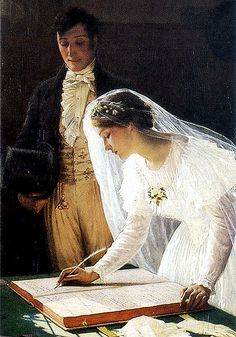
Wedding Etiquette

We have been enjoying, taking part in, and attending weddings for centuries, however they have evolved over time into what we recognize today as the perfect wedding. Then again, what is the perfect wedding? A desert island in the middle of the Pacific Ocean or Westminster Abbey? Then we have to consider the dreaded guest list and the Plus 1’s, and let’s not forget the children and animals you wish to invite. 

I have created my top ten list of things to remember when it comes to weddings, and if you follow my advice you will be able to recreate your very own Royal Wedding. 


Now, before we go any further, an important fact. A wedding is a ceremony where two people are united in marriage. Wedding traditions do indeed vary from country to country. The majority of wedding services involve the exchange of vows to each other, and above all, the important wedding ring. This all has to be conducted by an authorized figure and in a licensed venue so let’s not ask the local plumber. Special wedding garments might be worn, and the ceremony is usually followed by a wedding reception, dinner and dancing. 


  1. Invitations and save the date - Please give the guests as much notice as possible the minimum of 12 weeks. The invitation should be sent out 6 weeks prior to the wedding.  Some people may also have an engagement party once the announcement has been released with perhaps an official photograph or an announcement in the national or local paper. 
  1. The Guest List - This can make and break friendships. The so called Plus 1’s are only accepted if they are known to the bride and groom, and of course only if numbers permit as this also affects the venue, food and drink. In other words the all important budget. Don't be offended if children aren't invited, as this could be due to space etc.
  1. Wedding Ceremony Seating - Ushers have the very important duty of showing guests to their places. The groom’s family and friends should be seated on the right, and bride’s on the left, and let’s not forget the hierarchy as this again can make or break families. The senior members of the family are seated on the front rows, and don't forget to leave room for the bridesmaids and flower girls, as they will walk up the aisle behind the bride. 
  1. Money Money Money - Traditionally the Bride’s wonderful and very generous parents paid the overall cost of the wedding in order to marry their daughter to a gentleman. The groom’s parents these days may pay for the drinks or going away car. This is open for discussion in the 21st century, which will please a lot of bride’s parents.
  1. The Reception/Wedding Breakfast – bride and groom meet and greet the guests at they arrive. A traditional sit down meal have the top table with the bride and groom, both sets of parents, best man and chief bridesmaid. During a drinks reception photos can be taken.
  1. Gifts - The bride and groom buy the presents for the bridesmaids, flower girls, best man, page boys and of course the usher. Don't forget they also buy a gift or flowers for the mothers, which would be presented at the speeches. Presents to the happy couple are opened in advance so thank you letters can be written on honeymoon.
  1. Speeches - These  are made at either the drinks reception or during a meal when guests sit down, and some people may even give speeches during the coffee. For the speeches we have the best man who thanks the bridesmaids and flower girl and reads out messages, followed by the bride’s father, and finally the speeches are ended with the groom, who will thank the parents of the bride and his parents.  
  1. The Cake - The all important wedding cake is normally cut at the end of the speeches. This is a very important photo opportunity but lets keep this dignified as it is not a photo-shoot for the next Marks and Spencer's campaign. If you choose a chocolate cake always have a top tier made as fruitcake to send family or close friends if they could not attend. Top tiers are also for keeping for the christening the first child. 
  1. Honeymoon - The bride and groom pay the actual honeymoon; never assume the parents will pay for this!  Around 23.00pm the Bride and groom will change into their “Going Away Clothes” and will then depart for their romantic break to either a desert island or wherever your dreams take you. 
  1. Fireworks - Upon departing you might arrange a little fireworks display but if we are looking at 30 seconds of cheap fireworks and not a 5min extravaganza then let’s pass on this idea. The couple would then usually depart at midnight.


Monday, 1 May 2017

Petiquette

The Great British public are famously known as pet lovers, however these days that can be said in quite a few other countries as well. As we see our beloved pets become more than just the dog or the cat as they become our Bobo, Cuddles and Precious and are very much now part of the family. Gone are the days of sleeping outside in the cold dark kennel and hello to a palatial bedroom which may even consist of a four poster bed, with a gold water bowl and special lifts to get up and down one’s stair case. Yes, it really is a dog’s life! In fact, I even know some dogs that are looked after better than your other half. 

Now what we have to try to remember is that our beloved children may not be viewed in the same light when they decided to jump on your ex best friend’s luxury sofa or have a lovely roll around after a lovely walk outside while enjoying a mud bath, on their newly laid cream carpet; Yes, the joys of ex-best friends. But animal lovers across the world, don't worry I am going to save your relationships with you friends, families and better halves as I have created the top ten pet etiquette rules. Follow these rules and we won’t go wrong. 

1: Chairs and Bedding - This may be the normal procedure for your beloved pet to go on your soft furnishings, however, when visiting others we don't allow this unless permission is granted in advance. 

2: Ask before we feed - Never feed someone else’s pet without permission, owners may have them on strict diets or they might be allergic to something the same way us humans cannot eat things, therefore always ask.

3: Don’t stroke without permission - Our beloved pets may be like gentle little ‘Winnie the Poo’ to us but to someone else it might be more of a case of Jaws, therefore always ask before we stroke.

4: Always pick up their “manure”  – Unfortunately, our loved one’s (referring to the pets) may suddenly have to go, lets face it we have all been there, but sadly they are unable to deal with the aftermath so can we always make sure we bag and bin as soon as the procedure is over. 

5: Always ask before taking them with you - They may have been to palaces, castles, stately homes and the local spa, however Great Aunt Dorothy may not feel the same warmth toward your Bobo as you do; therefore always ask before taking them with you. Even if visiting a shop, always ask before you enter.

6: Never leave them with someone else without their permission - For some reason some people find it quite acceptable to suddenly pop off to the shops and leave the family pet with their best friend at a moment’s notice. We must always plan and ask in advance and we never assume.  If you have a pet visiting you, make sure you have plenty of water and a few treats.

7: Always give a gift to a pet sitter - If someone is good enough to look after your Cuddles, then may I suggest a little gift might be in order and I don't mean vouchers for the local Psychiatric ward but more a voucher for a local spa or if there is a budget, then a nice box of chocolates. 

8: Pay for any damage they may cause - Animals will be animals and to your shock, may have a mad five minutes, and your little Precious has either caused minimal damage or a scene that resembles a war zone, therefore always be willing to cover the costs of any damage. 

9: Don’t let other people trip over them - Our little babies can be a trip hazard especially when they are the size of a mouse, therefore we must always be aware of this.  In large crowds perhaps pick them up and carry them through the public, I doubt they will complain. 


10: Keep noise volume to an Alexa two.  - Our little sweeties can have large, loud voices similar to the local fog horn which I very much doubt the neighbours will appreciate; therefore perhaps ask them or even better train them to lower their beautiful voices.

Monday, 3 April 2017

Her Majesty's Yacht Britannia

A visit to HMY The Royal Yacht Britannia 

Recently I was honoured to be invited on to Her Majesty's Yacht Britannia. Now for those of you who may not know, the British Royal family for several hundred years have owned a Royal Yacht. Britannia to date is the last Royal yacht and was decommissioned in 1995. She is now based in Leith, Scotland and has become Scotland’s Number one Tourist attraction. I was thrilled to be invited to go onboard to have a look around including seeing the drawing room and dining room. 

When we arrived, I was invited on board via the VIP entrance which is used for guests hosting private events on the ship or VIP visitors. I was most impressed at the size and the grandeur of Britannia. It is small in terms of modern yachts, yet it is beautiful and tasteful. It is also slightly dated but this adds to the character and history of the ship. 

When we arrived, I was shown into one of the meeting rooms which has a waitress/butler in attendance to offer us tea/coffee and cakes. 

May I add the carrot cake was delicious and beautifully presented on fine china plates with lovely paper napkins with the Britannia crest on each one. After the meeting, we were offered a tour of the ship’s main features which included the sun lounge, drawing room and dining room. I was delighted to be asked to go into the drawing room for a few photographs. Everything is still as it was when the Queen and the Royal family were still on board. In fact, the clocks are all stopped at 15.01 which was the time the Queen last left the ship. 

After the drawing room and a quick look at the sun lounge, we then went to see the dining room. I was asked my advice on the layup of the table which was beautifully done. The only thing I noted was the the butter knives were placed incorrectly on the butter dishes and I was permitted to move these to where I felt they should go, which is just in front of each dish. Once I moved these I did say I would not be offended if they moved them back, however since then I have been in touch with Bruce who is the head of events and he informed me that he would leave the knives in their new positions, which I felt very honoured to be told. In a way, I also felt I was helping to keep up the Royal standards which this ship was also known for. Britannia was a way of taking British customs and traditions across the world with the Royal family or government minsters. I also checked the spacing of the cutlery and glassware and made a few other suggestions as I went around which will hopefully assist them during their events. 

I was then invited to view the display cupboards where I recognised the glassware which had the initials ER and the candlestick lights which were used on board. When Britannia was in service, no naked flames were used onboard; instead they used electric light bulbs on the candlesticks which, if I may say, worked beautifully. Back in 1992 there was a wonderful documentary about Britannia which I watched as a child and in fact, it was this documentary on ER that gave me the dream and ambition to one day work for the Royal family and serve the Queen. 

After spending a few hours on the ship, it was time to disembark, with time for a few more photographs then it was time to leave; however I hope that it will not be long until I return and look forward to seeing if any of my other suggestions have been taken onboard. 


While on board, Bruce and myself discussed napkin folding and he kindly sent me a link to some interesting folds. Here is my youtube video with me demonstrating a few of them - youtube.com/theroyalbutler

Saturday, 9 July 2016

Etiquette of The Loo or not the Loo? That is the Question.

Since humans first walked the earth we have of course had a few basic needs. One of them being to relieve ourselves of our human waste. This has adapted many different sayings from "I am going to the Toilet" to "One's off to powder one’s nose". My question is where do these terms come from and what is the history behind it all? I decided to run a poll on Twitter to see what the general public felt about these terms and the results were fascinating but I will come back to these results later in the blog.


You may well ask, how long have we had the luxury of toilets/bathrooms and sewage works? Amazingly the answer is thousands of years. The Romans and Egyptians were the first to have had working sewers. Sir Mortimer Wheeler wrote, "The high quality of the sanitary arrangements could be envied in many parts of the world today". Sir Mortimer was the director general of archaeology in India from 1944 to 1948. He was of course referring to the fact that in 3000BC "Toilets" and sewers were invented in several parts of the world, with the Indus Valley civilisation being one of the most advanced in 2800BC. They had lavatories built into the outer walls of houses which were made with bricks and wooden seat tops with vertical chutes where the waste fell down into the street drains or cesspits. 

An example of "toilets" with flowing water to remove the waste were discovered early in Skara Bra in Orkney, Scotland which were occupied between 3100BC and 2500BC. These had a drain running directly underneath them. In the 18th Century BC Egyptians were using "toilets". Roman "toilets" are thought to have been in the sitting position, however sitting "toilets" only came into general use in the 19th Century in the western world. The Romans also installed "toilets" in the Bath Houses using running water. 

It was in 1596 that Sir John Harington, who was a prominent member of Queen Elizabeth I court, invented the modern flush "toilet" in his house in 1596. It was here that Queen Elizabeth I tried out his new invention. It was however Thomas Crapper who increased the popularity of the "toilet" and invented the ballcock. Thomas's product became high demand and was issued with several Royal warrants. Thomas Crapper also owned the worlds first bath, "toilet" and sink showroom in Kings Road, London until 1966. It should also be noted that sadly, this is where the word “crap” does indeed hail from due to his association with Lavatories. 

There is also interesting debates as to what you should call the daily ritual. It is for this reason that I am going to explain where the different variations come from. 

The word toilet is of course French. Many things in the 18th century Britain had French influence as it was fashionable for the times. Toilet means toile which is French for cloth. This toile or cloth would be draped over the lady or gentleman's shoulders while there was a series of operations been carried out on their hair and in relation to body care, which included the morning routine of washing, shaving, and making the person up. This took place around the dressing table which was also covered with a cloth on which the toile service was displayed. It consisted of a mirror and various brushes and it also contained the powder for make up. This ensemble would be called toilette as was the time spent at the table during which close friends and tradesmen were being received. It was only in later years that the word "toilet" became a euphemism for lavatory, as it would be said in the expression "powder my nose" meaning they were going to the "toilet". 

The word Lavatory is Latin for lavātōrium, which in turn comes from Latin for lavō ("I wash"). The word was referring to a sink or wash basin for washing, but eventually became a room for washing which would be found for example in medieval monasteries. Later the word became associated with "toilets" because the "toilet" would move into the same room that you wash in, and the meaning has over the centuries evolved into the present meaning. 

The term Loo has many theories but a personal favourite of mine is that it evolved from the word Waterloo, with the first recorded entry of the word in 1922. Waterloo or Watercloset would of course be shortened to Loo. 

Chamber pots were a pot in which you would excrete waste. These were made of ceramic or metal. Romans and Greeks brought them for meals and drinking sessions to other Roman or Greek homes. There were large receptacles in the cities into which the pots of urine would be emptied which was then collected and used for the urea in various production. In the ancient times pilgrims took chamber pots with them on the journeys, in the early modern era they would be made from China and copper with decoration. They were popular in the Victorian era.

Before the flushing Loo, people would use the chamber pot at night. I should add before flushing loos, the Loo was situated in a separate building or an outhouse next to the main house. Indoor lavatories were first provided for the upper classes and over time became available for the lower classes. In 1890 building regulations stated that the working class homes did not require indoor loos.  Today we don't use chamber pots except in hospitals which we now call bedpans. 

Now to the interesting debate and the correct term;  in 1954 Alan S.C Ross coined the terms "u and no u" (us and non us) in an article on the differences that social class makes in the usage of the English. Author Nancy Mitford wrote an essay on "The English Aristocracy" in 1954 using u and non u and provided a glossary of terms used by the upper classes. In this the world "toilet" was referred to as Lavatory or Loo but never "toilet", and to this day the term is still used by the upper classes. I personally find it amusing considering the term originally was "toilet" as used by the French, and let's not forget a French King created etiquette. It is interesting therefore that we choose not to use the French term but rather go with the term that refers to a waterloo (watercloset). This of course is how the British have developed etiquette into their own. The world now seems to look to us for this guidance. 

The question I ran in my poll last week was ‘what is the corrects term, Toilet, Lavatory or Loo, or Other’. The results were interesting and are as follows:

Toilet 23%

Lavatory or Loo 66%

Other 11%

So it appears the majority agree with Nancy Mitford that the correct term is of course Loo.

A huge thank you to everyone as always who took part in this week’s Twitter poll, without your wonderful votes and comments this would not be possible. This week I will run my next poll on Wednesday. 

Wednesday, 29 June 2016

Etiquette of The Shoe


We have been wearing protection on our feet for well over 10,000 years. We all take it for granted that as part of our dressing ritual we place this protective item on our feet. Could you imagine if suddenly we did not have shoes? We would be restricted on what and where we can go but thankfully our ancestors thought about this and came up with the protective essential.

So who came up with the idea for a shoe? The earliest known shoe or rather, sandal, was found in 1938 in The Forest Rock Cave in the United States of America. The oldest leather shoe was found in a cave in Armenia in 2008 which dates back to 3500 BC. This shoe was made from a single piece of cowhide laced with leather cord along seams on the front and back.

It has been discovered by scientists that since we have been wearing shoes, this has resulted in less bone growth resulting in shorter and thinner toes as the thickness has decreased over the 26,000 years.

Even though Thong Sandals became a popular piece of footwear many ancient civilisations still preferred to be barefoot. Ancient Greeks shoes were worn in the theatre as a sign of status. Ancient Gods and heroes were depicted barefoot! Romans however came to see shoes as a sign of power and a necessity of the civilised world, but their slaves were always barefoot.

As civilisations developed, Thong Sandals were worn, which are our equivalent to modern day flip flops.There are images of the ancient Egyptians wearing them in 4000 BC. Another pair found in Europe were made from papyrus leaves and dated from 1500 years ago. Papyrus and palm leave Thong Sandals were the materials of the ancient Egyptians. Sandals were also popular in the first century in Jerusalem. The Masai of Africa made their sandals out of rawhide, while in India they were made from wood and rice straw was used in China and Japan. Leaves of the sisal plant made twine for sandals in South America and the Yucca plant was used in Mexico.

Medieval shoes were made with leather using a method known as the turnshoe method. This is when the leather was turned inside to make the shoe, then turned the right way when finished. Some shoes were even made with drawstrings to tighten the leather around the foot. The turnshoe method was replaced with the welted method in the 1500s. At this point patterns also became popular, also around this point Crakow shoes were popular which had extremely long toes. In the 16th Century, Royalty started wearing high heeled shoes to make them look taller and powerful, this is where we get the term “well heeled”. In the 17th Century most leather shoes had a sewn on sole and this remains the same way to this day. Shoemaking was commercialised in the 18th century to cope with the demand for quality shoes.

From the point of view of shoe etiquette, it is very simple! In the United Kingdom we are quite relaxed about wearing our shoes but in Arab culture you never show the sole of a shoe as it is considered rude. The only thing I do strongly recommend, during the day when visiting someone privately ( i.e. not a lunch / dinner party or event), if the shoes are dirty then it is polite to offer to remove them.

I also have a rule that brown shoes are for the day and black shoes are for the evening, however as fashions change, brown shoes are becoming more acceptable at evening events, such as a drinks party at an art gallery, paired with a dark navy suit. There is an urban myth that brown shoes are for the country and black shoes are for the city;  this is nonsense and I ask you all to ignore this myth.

On a more delicate nature I must also add if you suffer from BFO (Bad Foot Odour) then I recommend you address this before removing shoes in someone else's home. There are many products on the market to assist you with this, as there is nothing worse than for you and the host to have to sample your unpleasant fragrant problem in their home and worse still with their guests, as this can make you feel extremely embarrassed and unsure how to address the situation .

When it comes to the care and maintenance of your shoes, this is a very simple procedure which people seem to worry about. Personally I enjoy cleaning shoes and see it as a relaxing and enjoyable experience allowing me to make pride in seeing my work on my employer’s feet. Part of my butler courses also sees me teaching the students this time old method.

Very simply make sure you have the correct shoe polishes you need, i.e. Brown, Black or Neutral etc. It is important you are sure it is an exact match. I personally use Kiwi Shoe Polish. If you are not sure about the colour, always do a test area first! Next you need a cloth to apply the polish and one to take it off. I use two dusters for this. Remember each colour requires its own cloths for applying and taking off. Next, you need two old toothbrushes for the hard to reach spots, and finally you need to decide if you are going to use the spit and polish method or boiling water. 

I always put down some old newspaper on the area I will be cleaning the shoes to protect the surface of the table. If you are using water, boil the kettle, open the shoe polishing tin and in the lid part you will pour a small amount of the boiling water. Prepare the shoe by wiping off any excess dirt and taking a damp cloth over the sole to make sure the shoe is free from dirt. You then get one of the cloths and apply a small amount of water and then apply a small amount of shoe polish to the cloth. In a circular motion, you apply the polish all over the shoe. You can use the tooth brush (soft bristles) to apply the polish along the point where the leather joins the sole (welt) as this can be a tricky area to get into. Leave the shoe as you repeat the same process to the other shoe. I then leave them for around 15 minutes to settle. With the other cloth, you buff the whole shoe. The welt area is buffed with the other tooth brush. Buff vigorously until you achieve a good shine, then repeat the process to the other shoe. If you want to apply the spit and polish method, it is the same steps as above except instead of water you use your saliva (spit). You do this onto the side of the tin that contains the polish and gentle rub into the polish with the cloth and apply a small amount on the the shoe and rub all over. When buffing the shoe you also spit on the shoe a few times as you continue to buff.

If you are cleaning suede shoes, you do not apply water, spit or polish to the suede. You can use a damp cloth on the outer sole and heel. There are specialist cleaning products which any cobblers can recommend.

Recently, I ran a poll asking my social media followers how often do you clean your shoes. The results were the following:

Daily: 12%
Weekly: 12%
When required: 67%
Never: 9%

Thankfully, 'Never' was the lowest as you can see. I would like to say a huge thank you to everyone who took part in the poll and the next poll will run this Wednesday, 24th February.