Showing posts with label Royal. Show all posts

Wednesday, 14 February 2018

Top 10 Valentine's Day Etiquette Rules.

Saint Valentine’s Day

Arguably one of the most romantic days of the year falls on the 14 February. We are constantly reminded in the shops, online and from your loved ones that you must remember to buy a card, present or flowers for that special person in your life. As I have said before I feel it has become very commercialised, however as I have always said it is important to tell people how much they mean to you and how much you love them. This should take place every day though, not just on Valentine's Day!

For those of you that may not know, Valentine's Day as we know it is actually called Saint Valentine's Day or the feast of Saint Valentine, which is celebrated around the world and in fact some countries even have a public holiday. Saint Valentine, however has been referred to as several early Christian martyrs were named Valentine, however, there is a legend a Valentine was imprisoned for performing weddings for soldiers who were forbidden to marry and who also preached to Christians who were persecuted under the Roman Empire.


It is believed that during his imprisonment he healed his jailer’s daughter and before his execution he signed a letter with "your valentine".  There are of course many other stories that can be found online for those of you that want to know more.

Now let’s get back to the important part of Valentine’s day, my etiquette rules we should all follow.

My top ten rules are the following:

1.     Plan ahead: many couples decided to go out, therefore if you don’t book the table you may not get in. Gentleman the local Kebab shop is not an option!

2.    Dress to impress: Ladies generally make a great effort however gentlemen seem to think they look good in anything. This I hate to tell you is not true and no you do not look good in a bin bag!  Make an effort and put on something smart/casual or formal depending on the venue. Leave the “I don’t care look” at home.

3.     Gifts: Buy a gift for the other half, but don’t go mad with the budget. A FabergĂ© egg may not impress your partner as much as some homemade chocolates you have personally made. “It’s not about the money, money, money!”  

4.    Taking the lead: If you are the one organising the evening and paying the bill then you take the lead. You are in other words the host, therefore do not appear unsure or indecisive during the evening.

5.     Be a Gentleman: This is an occasion for gentlemen to act like a gentleman. We get the doors for your partner and we let the other half sit down first etc. Remember Men, we stand for ladies every time they leave the table, for example if they visit the loo etc.

6.    Ladies are ladies: On this occasion, be gracious and elegant like the lady you are. Don’t be offended if a gentleman wants to treat you as such. Enjoy the moment of the gentleman making you feel like a Princess, and don’t complain!

7.     The meal: When the other half is taking you out for a meal don’t go mad but consider their budget. However, you will be offered to order first so perhaps discuss what your partner is considering staying within budgets, or go with the salad!

8.    Alcohol consumption: Don’t drink too much on this occasion. Perhaps one to two glasses of wine. If your partner offers you a drink don’t go for the most expensive, despite how much you may like vintage Bollinger champagne. Once again you could consult your partner on what they are thinking.

9.    Carriages: When it is time to leave, either drive or escort you partner home, unless they insist on returning home via a cab which the person taking the other out will pay for. Perhaps following up with a phone call to confirm you got home safely and to thank your host for a lovely evening.

10.  Letters: Following this evening up with a thank you letter no longer than 7 days after the 14th February. Buy some nice quality stationary and take your time writing this letter so show your appreciation for a magical evening.


Wednesday, 21 June 2017

The State Opening of Parliament


The Opening of Parliament began out of practical necessity. By the late fourteenth century, the means by which the King gathered his nobles and representatives of the Commons had begun to follow an established pattern. First of all, Peers' names were checked against the list of those who had been summoned, and representatives of the Commons were checked against the sheriffs' election returns. The Peers were robed and sat in the Painted Chamber at Westminster then the Commons were summoned, and stood at the Bar (entrance) of the Chamber. 


A speech or sermon was then given by the Lord Chancellor explaining why Parliament had been summoned, after which the Lords and Commons went separately to discuss the business in hand. The monarch normally presided however not only for the Opening but also for the deliberations which followed.

In modern time, the State Opening of Parliament marks the formal start of the parliamentary year and the Queen's Speech sets out the government’s agenda for the coming session, outlining proposed policies and legislation. It is the only regular occasion when the three constituent parts of Parliament, the Sovereign, the House of Lords and the House of Commons meet.

State Opening happens on the first day of a new parliamentary session or shortly after a general election. The State Opening of Parliament normally takes place in May/June.

State Opening is the main ceremonial event of the parliamentary calendar, attracting large crowds and a significant television and online audience. It begins with the Queen's procession from Buckingham Palace to Westminster, escorted by the Household Cavalry.

Before the arrival of the Queen, the Imperial State Crown is carried to the Palace of Westminster in its own State Coach. From the Victoria Tower, the Crown is passed by the Queen's Bargemaster to the Comptroller of the Lord Chamberlain's office. It is then carried, along with the Great Sword of State and the Cap of Maintenance, to be displayed in the Royal Gallery.

The Queen arrives by carriage at the Sovereign's Entrance accompanied by her consort Prince Philip and are met by Lord Speaker, the Lord Chancellor (with the Purse containing the Queen's Speech), the Lord Great Chamberlain and the Earl Marshal. They proceed to the Robing Room. The Royal Standard is hoisted to replace the Union Flag upon the Sovereign's entrance and remains flying whilst The Queen is in attendance.

Wearing the Imperial State Crown and the Robe of State, The Queen leads the Royal Procession through the Royal Gallery, packed with 600 guests, to the chamber of the House of Lords. The Queen then proceeds through the Royal Gallery to the House of Lords. The procession is formed, marshalled by the Earl Marshal, and after the procession through the Royal Gallery they enter the Prince's Chamber to the Chamber of the House of Lords, usually accompanied by the Duke of Edinburgh and immediately preceded by the Earl Marshal, and by one peer being the Leader of the House of Lords carrying the Cap of Maintenance on a white rod, and another peer normally a retired senior military officer carrying the Great Sword of State, all following the Lord Great Chamberlain and his white stick, commonly the practical implement of ceremonial ushers, raised aloft. Once seated on the throne, the Queen, wearing the Imperial State Crown, instructs the House by saying, "My Lords, pray be seated"; her consort takes his seat on the throne to her left and other members of the Royal family may be seated elsewhere on the dais, for example the Prince of Wales and Duchess of Cornwall are seated on thrones on a lower portion of the dais to the Queen's right. 

When Her Majesty has taken Her seat on the Throne, the Lord Speaker and Lord Chancellor stand on Her right at the foot of the steps of the Throne. The Queen is attended by the Officers of State. The Queen then commands Black Rod, through the Lord Great Chamberlain, to summon the Commons, which he does in these words:

"Mr/Madam Speaker,

The Queen commands this honourable House to attend Her Majesty immediately in the House of Peers."


Motioned by the Monarch, the Lord Great Chamberlain raises his wand of office to signal to the Gentleman Usher of the Black Rod (known as Black Rod), who is charged with summoning the House of Commons and has been waiting in the Commons lobby. Black Rod turns and, under the escort of the Door-keeper of the House of Lords and a police inspector, who orders "Hats off, Strangers!" to all persons along the way, approaches the doors to the Chamber of the Commons.

As Black Rod approaches the doors to the Commons chamber are shut in his face: a practice dating back to the Civil War, symbolising the Commons independence from the monarchy. In 1642, King Charles I stormed into the House of Commons in an unsuccessful attempt to arrest the Five Members, which included the celebrated English patriot and leading parliamentarian John Hampden. Since that time, no British monarch has entered the House of Commons when it is sitting

Black Rod strikes the door three times before it is opened. The Speaker then The Sergeant-at-Arms picks up the ceremonial mace and with the Speaker and Black Rod they proceed to attend the summons at once as they lead the Members of the House of Commons who then walk in pairs, towards the House of Lords.  By tradition, the members walk with each other in much discussion and joking rather than a formal process. 

The Prime Minister and the Leader of the Opposition followed by The Deputy Prime Minister and the Deputy Leader of the Opposition usually walk side by side, leading the two lines of MPs. The Commons then arrive at the Bar of the House of Lords where they bow to the Queen. No person who is not a member of the Upper House may pass the Bar unbidden when it is in session. A similar rule applies to the Commons. They remain standing at the Bar during the speech.

The Queen's Speech is delivered by the Queen from the Throne in the House of Lords and is presented to her Lord Chancellor. Although the Queen reads the Speech, it is written by the government. It contains an outline of its policies and proposed legislation for the new parliamentary session.

Following the speech, the Queen leaves the chamber before the Commons bow again and return to their Chamber.

When the Queen leaves, a new parliamentary session starts and Parliament gets back to work. Members of both Houses debate the content of the speech and agree an ‘Address in Reply to Her Majesty’s Gracious Speech’. Each House continues the debate over the planned legislative programme for several days, looking at different subject areas. The Queen's Speech is voted on by the Commons, but no vote is taken in the Lords.

Traditions:

The traditions surrounding State Opening and the delivery of a speech by the monarch can be traced back as far as the 16th century. The current ceremony dates from the opening of the rebuilt Palace of Westminster in 1852 after the fire of 1834.


Before the The Queen arrives at the Palace of Westminster, the cellars are searched by the Yeomen of the Guard in order to prevent a modern-day Gunpowder Plot. The Plot of 1605 involved a failed attempt by a group of provincial English Catholics led by Robert Catesby to blow up the Houses of Parliament and kill the Protestant King James I and aristocracy. Since that year, the cellars have been searched, now largely, but not only, for ceremonial purposes.

Thursday, 8 June 2017

The Etiquette & Protocol surrounding the Official Birthday of Her Majesty Queen Elizabeth


The Trooping of the Colour has marked the official birthday of the British Monarch for over 260 years. This tradition was started by King George II in 1748. The King was born in November, and felt it would be too cold at that time of year to hold his annual birthday parade, therefore he combined his birthday celebration with an annual spring military parade known as Trooping the Colour, in which regiments displayed their flags or "colours" so soldiers would be familiar with them. 

The tradition has continued to this day. The Queen's real birthday is on April 21, but she decided to continue  with the tradition of celebrating in June otherwise known as The Queen's Birthday Parade, when the Queen inspects soldiers from the Household Division. It takes place on Horse Guards Parade behind Whitehall.

The Trooping the Colour involves over 1400 parading soldiers, 200 horses and 400 musicians in a great display of military precision, horsemanship and fanfare to mark The Queen's official birthday.
Streets are lined with crowds waving flags as the parade moves from Buckingham Palace and down The Mall to Horse Guard's Parade, alongside members of the Royal Family on horseback and in carriages.
The display closes with an RAF fly-past, watched by members of the Royal Family from Buckingham Palace balcony.

The six main events of the day are as follows: 

1. The streets are lined with crowds waving British flags as the parade moves from Buckingham Palace and down The Mall to Horse Guard's Parade, alongside Members of the Royal Family on horseback and in carriages. The Queen now travels with The Duke of Edinburgh in a carriage.

2. When the Queen arrives at Horse Guard's Parade in Whitehall, she is greeted by a Royal salute and carries out an inspection of the troops, who are fully trained and operational soldiers wearing the ceremonial uniform of red tunics and bearskin hats.

3. After the military bands have performed, the escorted Regimental Colour, or flag, is processed down the ranks of soldiers. Over one hundred words of command are used by the Officer in Command of the Parade to direct the several hundred soldiers.

4. Once the Foot Guards have marched past The Queen, she returns in her carriage back to Buckingham Palace at the head of the soldiers, before taking the salute again at the Palace from a dais. 

5. Her Majesty is then joined by other Members of the Royal Family on the balcony at Buckingham Palace to watch a fly-past by the Royal Air Force. A 41-gun salute is also fired in Green Park to mark the occasion. 


6. The Royal family then have a private lunch to finish of the official celebration of Her Majesty's official Birthday.

Friday, 19 May 2017

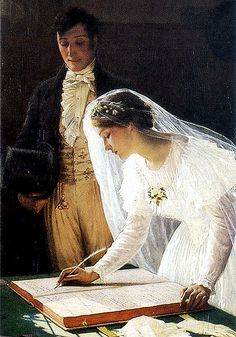
Wedding Etiquette

We have been enjoying, taking part in, and attending weddings for centuries, however they have evolved over time into what we recognize today as the perfect wedding. Then again, what is the perfect wedding? A desert island in the middle of the Pacific Ocean or Westminster Abbey? Then we have to consider the dreaded guest list and the Plus 1’s, and let’s not forget the children and animals you wish to invite. 

I have created my top ten list of things to remember when it comes to weddings, and if you follow my advice you will be able to recreate your very own Royal Wedding. 


Now, before we go any further, an important fact. A wedding is a ceremony where two people are united in marriage. Wedding traditions do indeed vary from country to country. The majority of wedding services involve the exchange of vows to each other, and above all, the important wedding ring. This all has to be conducted by an authorized figure and in a licensed venue so let’s not ask the local plumber. Special wedding garments might be worn, and the ceremony is usually followed by a wedding reception, dinner and dancing. 


  1. Invitations and save the date - Please give the guests as much notice as possible the minimum of 12 weeks. The invitation should be sent out 6 weeks prior to the wedding.  Some people may also have an engagement party once the announcement has been released with perhaps an official photograph or an announcement in the national or local paper. 
  1. The Guest List - This can make and break friendships. The so called Plus 1’s are only accepted if they are known to the bride and groom, and of course only if numbers permit as this also affects the venue, food and drink. In other words the all important budget. Don't be offended if children aren't invited, as this could be due to space etc.
  1. Wedding Ceremony Seating - Ushers have the very important duty of showing guests to their places. The groom’s family and friends should be seated on the right, and bride’s on the left, and let’s not forget the hierarchy as this again can make or break families. The senior members of the family are seated on the front rows, and don't forget to leave room for the bridesmaids and flower girls, as they will walk up the aisle behind the bride. 
  1. Money Money Money - Traditionally the Bride’s wonderful and very generous parents paid the overall cost of the wedding in order to marry their daughter to a gentleman. The groom’s parents these days may pay for the drinks or going away car. This is open for discussion in the 21st century, which will please a lot of bride’s parents.
  1. The Reception/Wedding Breakfast – bride and groom meet and greet the guests at they arrive. A traditional sit down meal have the top table with the bride and groom, both sets of parents, best man and chief bridesmaid. During a drinks reception photos can be taken.
  1. Gifts - The bride and groom buy the presents for the bridesmaids, flower girls, best man, page boys and of course the usher. Don't forget they also buy a gift or flowers for the mothers, which would be presented at the speeches. Presents to the happy couple are opened in advance so thank you letters can be written on honeymoon.
  1. Speeches - These  are made at either the drinks reception or during a meal when guests sit down, and some people may even give speeches during the coffee. For the speeches we have the best man who thanks the bridesmaids and flower girl and reads out messages, followed by the bride’s father, and finally the speeches are ended with the groom, who will thank the parents of the bride and his parents.  
  1. The Cake - The all important wedding cake is normally cut at the end of the speeches. This is a very important photo opportunity but lets keep this dignified as it is not a photo-shoot for the next Marks and Spencer's campaign. If you choose a chocolate cake always have a top tier made as fruitcake to send family or close friends if they could not attend. Top tiers are also for keeping for the christening the first child. 
  1. Honeymoon - The bride and groom pay the actual honeymoon; never assume the parents will pay for this!  Around 23.00pm the Bride and groom will change into their “Going Away Clothes” and will then depart for their romantic break to either a desert island or wherever your dreams take you. 
  1. Fireworks - Upon departing you might arrange a little fireworks display but if we are looking at 30 seconds of cheap fireworks and not a 5min extravaganza then let’s pass on this idea. The couple would then usually depart at midnight.


Monday, 28 March 2016

Breakfast Etiquette

Breakfast

One of my favourite meals of the day is the first meal of the day, breakfast! Breakfast is classed as the most important meal of the day. Those of us who skip it realise that it affects our daily performance. I have personally discovered that on many occasion, if skipped, then by lunch time I struggle with concentration and accuracy of what I am doing. I am sure this is the case for many  people who choose to do the same.

Breakfast today has become more than just cereal, cooked breakfast and toast with many variations from pancakes and syrup to chocolate cereal bars.

As with all my blogs, lets begin with a little history behind breakfast. As the name suggests, Break Fast was breaking the fast from the previous night.

An early morning meal has been taken for thousands of years going back to the Neolithic times when people then used quern-stones to grind hulled grains and then boiled them to make something similar to porridge. Workers of ancient Egypt would also eat an early morning meal of beer, bread and onions before they were put to work by the Pharaohs. In Ancient Greece, their early first meal of the day consisted of barley bread dripped in wine accompanied by figs and olives. Greeks were also known to have pancakes. In Rome, the early morning meal was known to consist of bread, cheese, olives, salad and cold meats left over from the night before, as well as drinking wine.

In the Middle Ages breakfast was not considered important, but they would have two meals during the day. One in mid morning and one early evening, though this did vary throughout Europe.

In the 13th century, Dominican priest Thomas Aquinas wrote in his Summa Theologica that breakfast committed “praepropere": a sin of eating too early, which was connected with gluttony. In this time, overindulgence and gluttony were considered wrong by the Catholic Church. The Catholics  presumed that if you ate breakfast then you had other lusty appetites too. Alcohol, wine and ale were considered to be a weakness.

Breakfast in certain areas was only taken by children, the elderly, the sick and working men. Everyone else did not speak of or take part in eating in the morning. To eat  breakfast meant that you were poor, or worked as a farmer or labourer who needed the meal to sustain work. Medieval people saw gluttony as a sin and a sign of weakness and men became ashamed of eating breakfast.

In the 15th century, breakfast included meat. At this point, noble men were seen to enjoy and take part in breakfast and therefore it became common practice. In the 16th-century the Europeans were introduced to caffeinated beverages and this paved the way for consideration to allow breakfast. It was believed that coffee and tea helped the body in “evacuation of superfluities" and it was therefore consumed in the morning.

In the early sixteenth century, some physicians warned against eating breakfast because they said it was not healthy to eat before a prior meal was digested. By the 1550s, however there were multiple sources that claimed breakfast was actually an essential necessary meal. In 1551 Thomas Wingfield stated that breakfast was an essential meal. In 1589, Thomas Cogan stated that it was unhealthy to miss breakfast in the morning. Mr Cogan was one of the first to claim that it was healthy for those who were not young, ill or elderly to eat breakfast.

Prior to 1600, breakfast in the United Kingdom included bread, cold meat, fish and of course ale.
Today, the full English breakfast consists of bacon, sausages and eggs, often served with a variety of side dishes and a beverage such as coffee or tea.


The etiquette of breakfast is very simple. Breakfast is a sit down meal with a spoon and a starter fork and two starter knives (small); you also have a side plate and napkin. Your breakfast starts with a glass of freshly squeezed orange or apple juice. You then have a cereal, such as bran or similar, followed by the full English breakfast which always includes toast. During the meal, you would take tea or coffee. The toast should arrive with the crusts cut off and in rectangles. The reason for this is the fact you never cut toast at the table, nor should you break it. The pieces in the toast rack should be small enough to eat in a few bites. You apply the butter and condiment of your choice on the side of your plate and apply it to the toast from there. If you have larger pieces of toast, don't butter and apply your condiment all in one go, rather focus on a small piece at a time, but as mentioned you don't cut or break it.

Last week I ran a poll on Twitter asking if my followers like the crusts left on or cut off. The results were the following:


Crust% on 82%

Crusts off 18%

This was an interesting result showing that the majority felt the crusts are an important part of their breakfast. I was asked what should happen to the crusts that are cut off and it is simple. All crusts are given to the chickens or to the birds.

I would like to say a huge thank you to everyone who took part in the poll and I will run my next poll later this week.